Reading
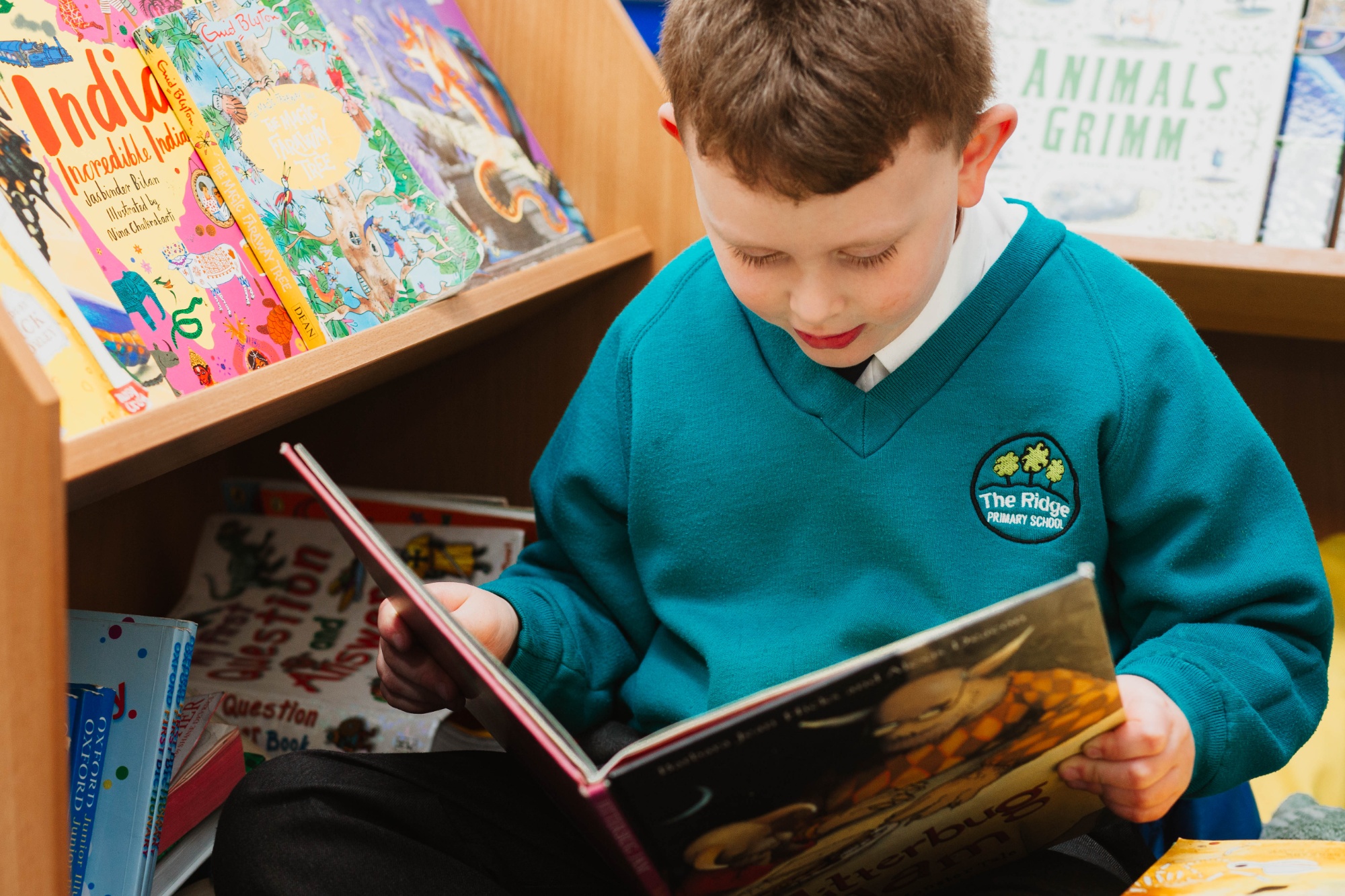
Reading at Home
Key Stage 1
All Children will bring home a library books. This can be changed as frequently as children wish by visiting the class library. Children can also visit the school library.
Library Books
Children will be bringing home a book from either their class library or the school library. Staff and Reading Ambassadors will offer recommendations to them but ultimately it will be up to them which book they choose to bring home. At times, children may choose to bring home a book which you might think appears to be too easy or too hard; however, in order to encourage a love of reading we will not be discouraging them from reading a slightly easier book, or returning to an old favourite. Equally, if a book is challenging for them, as long as staff feel the subject matter is appropriate for their age, we will allow them to loan the book and just ask that an experienced reader reads it to them. The purpose of these books is to help promote a love of reading! If they don't like a book and have persevered, then swap it!
Decodeable Readers
These books are matched to the Read Write Inc. phonics programme. They are linked to the children's learning in their Phonics lessons. However, the books that children will be bringing home will cover learning that children have already done - deliberately so! In Phonics lessons, children are having to learn the correspondences between the sounds of the English language and the spellings which represent them, as well as practising the skills of segmenting, blending and manipulating sounds. Furthermore, they are also learning that sounds can be represented by 1, 2, 3 or 4 letters, that the same sound can be spelled in more than one way and that a spelling can represent more than one sound! There is a lot of information to take on board! Therefore, reading a book containing this brand new learning is a challenge! Children will access challenging books but will do so in class under the guidance of their teacher. The home reader books will contain prior learning so that they can keep practising their reading skills and embedding their knowledge of the alphabetic code. This will help their reading to become automatic which in turn will develop their fluency and comprehension.
Bridging Books (Oxford Reading Tree)
Once children are confident with the conceptual understanding, skills and alphabetic code, we send them home with a 'Bridging Book', this may be in addition to their decodeable book or instead of. Bridging Books help children to continue to apply their phonics knowledge and skills whilst also developing their reading stamina, developing their knowledge of different authors, exposing them to a range of texts and, ultimately, helping them take steps towards being independent, confidence readers who love it!
Eventually, as children become more proficient with their reading, they will no longer need phonics and bridging books.
Key Stage 2
All Children will bring home a school reader book and a library book.
School Reader
Each child will select a book from the Key Stage 2 landing. The books on the landing are colour coded according to their complexity. Teachers ensure that children know the colour of the book they should be choosing and, in conjunction with teaching assistants, will listen to children read to check the book is pitched appropriately. When reading at home, children should start with their school reader book as this book will help develop them the most as readers. We know that children like to read independently but please ensure that as well as this, children are reading their school reader aloud and are chatting with you about what is happening. Please then record in reading diaries to show you have heard them read. Children should use their reading diaries to keep a log of the pages they have read. We would expect that children will take no longer than two weeks to read a book. The books are lengthy but if children are reading daily this will be achievable as the texts are pitched appropriately.
Library Book
Children will be bringing home a book from either their class library or the school library. They will be guided by a member of staff who will offer recommendations to them but ultimately it will be up to them which book they choose to bring home. At times, children may choose to bring home a book which you might think appears to be too easy or too hard; however, in order to encourage a love of reading we will not be discouraging them from reading a slightly easier book, or returning to an old favourite. Equally, if a book is challenging for them, as long as staff feel the subject matter is appropriate for their age, we will allow them to loan the book and just ask that an experienced reader reads it to them. The purpose of these books is to help promote a love of reading! If they don't like a book and have persevered, then swap it!
Some Children will bring home a Decodeable Book and, or Bridging Book.
Decodeable Readers
These books are matched to the Read Writ Inc. phonics programme. They are linked to the children's learning in their Phonics lessons. However, the books that children will be bringing home will cover learning that children have already done - deliberately so! In Phonics lessons, children are having to learn the correspondences between the sounds of the English language and the spellings which represent them, as well as practising the skills of segmenting, blending and manipulating sounds. Furthermore, they are also learning that sounds can be represented by 1, 2, 3 or 4 letters, that the same sound can be spelled in more than one way and that a spelling can represent more than one sound! There is a lot of information to take on board! Therefore, reading a book containing this brand new learning is a challenge! Children will access challenging books but will do so in class under the guidance of their teacher. The home reader books will contain prior learning so that they can keep practising their reading skills and embedding their knowledge of the alphabetic code. This will help their reading to become automatic which in turn will develop their fluency and comprehension.
Bridging Books (Oxford Reading Tree or Little Gems)
Once children are confident with the conceptual understanding, skills and alphabetic code, we send them home with a 'Bridging Book', this may be in addition to their decodeable book or instead of. Bridging Books help children to continue to apply their phonics knowledge and skills whilst also developing their reading stamina, developing their knowledge of different authors, exposing them to a range of texts and, ultimately, helping them take steps towards being independent, confidence readers who love it!
Eventually, as children become more proficient with their reading, they will no longer need phonics and bridging books.
Reading at Home - What you can do!
Book Trust have great guides full of useful tips about reading with your child at home. They can be found here:
https://www.booktrust.org.uk/books-and-reading/tips-and-advice/reading-tips/
At The Ridge, we follow the research from The Open University's Reading for Pleasure Pedagogies. They have some fantastic resources aimed at families. You can find them here:
https://ourfp.org/supporting-rah/book-chat-reading-with-your-child/
Intent
At The Ridge we intend for every child to become a fluent, confident reader. We believe that with the right teaching and the right texts, every child can become a reader. We intend for all of our children to understand the significance of reading both during their time with us and for their future lives. We believe that as well as being a pleasurable activity which provides escapism and comfort, reading should also provide connection to their own lives whilst at the same time opening their minds to the lives and experiences of others. We intend for children to be challenged by their reading: to wonder, empathise, question, evaluate, challenge, and reflect on the past whilst being equipped for the future. We intend for children to leave us having read a variety of fiction, non-fiction and poetry.
We intend to equip children to take part in meaningful conversations about texts which deepen their understanding of texts and the world. Furthermore, our intention is that children will experience an ambitious, challenging curriculum. One which develops their word-reading, fluency and language comprehension whilst at the same time instilling a love of reading which will last them a lifetime.
We intend for all children to not only learn to read but to learn from their reading too. We believe that reading should sit at the heart of the curriculum and strengthen the learning across the curriculum and in writing, and develop children on a spiritual, moral, cultural and social level.
We aim for the children to be able to:
- Reading easily, fluently and with good understanding
- Choose to read widely and often, both for pleasure and to learn from their reading
- Acquire a deep and broad vocabulary
- Appreciate a range of texts
- Use their reading to inform their writing
- Take part in discussions which deepen understanding, help them to learn and shape their opinions
- Understand what they have read by reading strategically
Key Components of The Ridge’s Reading Curriculum
- Phonics
- Daily Read Aloud
- Reading Comprehension
- Fluency
- Poetry off by Heart
- Vocabulary
- Quality texts
Implementation
The systematic teaching of phonics is of the highest priority throughout Reception and Key Stage 1. This year we are embarking on a new synthetic phonics programme called ‘Read Write Inc’ produced by Ruth Miskin.
Our staff teach learners the relationship between sounds and the written spelling patterns, or graphemes, which represent them. All children in Reception, KS1 and, where necessary, KS2 have daily phonics sessions in small ability groups where they participate in speaking, listening, spelling, reading and writing activities which are matched to their current needs.
We have an agreed progression for the teaching of new sounds and use a variety of schemes and resources to support this. The teachers draw upon observations, continuous and summative assessment to ensure children are stretched and challenged to identify children who may need additional support. Timely intervention is planned for those children who are working below expected levels as soon as their needs are identified, we want all children to be able to keep up and not have to catch up.
We recognise that systematic, high quality phonics teaching is essential, but additional skills and opportunities are needed for children to achieve the goal of being a well-rounded reader, namely comprehension. With our youngest children in the Pre-School class, there is a daily planned activity to develop vital speaking and listening skills and phonological awareness. Throughout the day back and forth conversations and sharing of stories and rhymes are used to develop individual children's attention, understanding and spoken language with a strong emphasis on extending vocabulary.
During the Summer term in Year 1, pupils undertake a Phonics Screening Test which assesses their ability to apply what they have learnt. Pupils who do not pass their Phonics Screening Test continue to have intervention to support the acquisition of these key skills and are retested in the Summer term in Year 2.
When children have completed the Read, Write, Inc phonics programme, reading is developed by places purposeful and meaningful reading at the heart of the curriculum, encouraging children to engage deeply with texts. Children read and enjoy high quality fiction, non-fiction texts and poetry, which (where possible) are linked to their subjects across the curriculum. All children read aloud during daily phonics or class reading lessons; in addition to this they read aloud in lessons throughout the day.
The Reading Spine
Reading for pleasure has social benefits as well and can make people feel more connected to the wider community. Reading increases a person's understanding of their own identity, improves empathy and gives them an insight into the world view of others (The Reading Agency 2015).
|
|
Term 1 |
Term 2 |
Term 3 |
Term 4 |
Term 5 |
Term 6 |
|
Pre-School |
Brown Bear, Brown Bear, What Do You See?
|
Dear Zoo Each Peach Pear Plum
|
Hug Jasper’s Beanstalk The Train Ride
|
Hairy Maclary Come on, Daisy
|
The Very Hungry Caterpillar We’re Going on a Bearhunt
|
Where’s Spot? You Choose |
|
Reception |
Avocado Baby Can’t you sleep little bear? Cops and Robbers
|
Peace at Last The Tiger Who Came to Tea Farmer Duck Handa’s Surprise
|
Mrs Armitage on Wheels On the Way Home Owl Babies
|
Rosie’s Walk SHHHH! Six Dinner Sid The Gruffalo Whatever Next! |
Lost and Found Mr Grumpy’s Outing
|
Elmer Knuffle Bunny
|
|
Year 1 |
Dr Xargle’s Book of Earthlets Emily Brown and the Thing Pumpkin Soup Meerkat Mail The Elephant and the Baby
|
Rain Before Rainbows Mrs Noah’s Pockets On sudden Hill
|
The Queen’s Nose The King who Banned the Dark It’s a No Money Day Mixed
|
Three Little Pigs RB The Suitcase The Giraffe, the Pelly and Me Beegu
|
Piggy Handsome Billy and the Beast Clean Up The True Story of the There is no dragon in this story
|
No1 Car Spotter Flat Stanley The Worst Witch
|
|
Year 2 |
The Proudest Blue The Animals Grimm Willow Wildthing The Barnabus Project
|
Paddington Ellie and the Cat Gorilla Traction Man
|
A Necklace of Raindrops Tales of Wisdom and Wonder
|
The Giving Tree The Hodgeheg 2 The Flower
|
The Boy Who Grew Dragons RS RB
|
The Bookshop Girl RS Look Up Tuesday
|
|
Year 3 |
The Truth Pixie
The Wild Robot
|
Leon and the Place Between
Malamander
|
The Tale of Despereaux |
The Iron Man RC
The Last Bear |
Rumaysa
|
The Lion, The Witch and The Wardrobe
|
|
Year 4 |
The Legend of Podkin One Ear
|
The Explorer RC
|
Charlotte’s Web
Varjak Paw
|
The Guggenheim Mystery
|
By Ash, Oak and Thorn
|
The Miraculous Journey of Edward Tulane
|
|
Year 5 |
When the Sky Falls
|
Julia and the Shark
|
The Nowhere Emporium
|
Wolf Brother
|
A Kind of Spark
|
Tom’s Midnight Garden
|
|
Year 6 |
The Arrival Orphans of the Tide
|
Fox Girl and the White Gazelle
|
The Skylarks’ War
|
Asha and the Spirit Bird
|
Skellig
|
Holes
|
The Ridge's Reading Spine underpins the reading and writing curriculum and includes fiction, non-fiction and poetry including nursery rhymes. The books on the reading spine are read aloud to children daily so that all children come together and experience an expert reader reading aloud a challenging text. The texts on the reading spine are the core books which we believe will help shape children as readers, writers and empathetic, thoughtful and curious citizens.
As part of the reading spine, children also listen to, and in some instances learn off by heart and perform, poems. The poems selected are poems that we feel all children should have heard and learned off by heart. Poetry develops children as readers and writers, offers whole texts in a manageable way, develops memory, text appreciation, higher-order thinking skills and is enjoyable!
|
Pre-School |
Twinkle Twinkle Humpty Dumpty Hickory Dickory Dock Little Bo Peep Baa Baa Black Sheep Three Blind Mice Old MacDonald |
Pet-a-Cake 5 Little Speckled Frogs 5 current buns 1,2,3,4,5 Once I caught a fish alive Hot Cross Buns Mary Mary quite contrary |
Tiny Tim Turtle 10 green bottles 10 in a bed Tom Thumb Sing a song of sixpence Wind the Bobbin Up |
Jack and Jill Little Jack Horner Grand Old Duke of York Old Mother Hubbard Yankee Doodle Crooked Man |
Little Miss Muffet Polly put the kettle on Wee Willy Winkle Little Bo Peep Queen of hearts Incy Wincy Spider The little piggy |
Dr Foster Owl and the Pussy Cat Wheels on the bus Hey diddle diddle Here we go round the mulberry bush Bobby Shafto's gone to sea. |
|
Reception |
One, two, buckle my shoe Ten fat sausages This old man There was an old lady Rub-a-dub-dub Ring a ring o' roses
Children's choice - repeat favourites or rhymes they have done in Kindergarten. |
The farmer's in his den Pop goes the weasel! Do you know the muffin man? I'm a little teapot If you're happy and you know it I had a little monkey Old King Cole
Children's choice - repeat favourites or rhymes they have done in Kindergarten. |
The mouse the frog and the little red hen Teddy bear A sailor went to sea sea sea Let's get the rhythm of the street Bizzy Buzzy Bee Hot Cross Buns Miss Polly had a dolly
Children's choice - repeat favourites or rhymes they have done in Kindergarten. |
Down in the Valley Each peach pear plum Little boy blue Pease porridge There was Princess Long Ago Five Little Ducks Happy Poem
Children's choice - repeat favourites or rhymes they have done in Kindergarten. |
Peter Piper Hush Little Baby Lavender's Blue London Bridge is falling down The Queen of Hearts Star Light, Star Bright
Children's choice - repeat favourites or rhymes they have done in Kindergarten. |
Row, Row, Row your boat The big ship sailed Lucy Locket Little Robin Redbreast Ladybird, Ladybird The cave
Children's choice - repeat favourites or rhymes they have done in Kindergarten. |
|
Year 1 |
The key 215 Love me mum 221 Snowed in 245 Eddies and the Nappy 218 Mrs Sprockett's Strange Machine 126 Rickety Train Ride 127 Squeezes 220 A sailor went to sea sea sea 76 Three, Six, Nine 77 I'm Popyeye the Sailor Man 78
|
What I'd do for my best friend 168 These are the hands 173 Topsy turvy 176 The tortoise and the hare 204 The Engine Driver 127 Buzz Buzz 183 Eeny Meeny Miny Moe 67
|
A big surprise 155 Pies 158 Noises in the night 159 The Bee's Story 184 Kangaroos 209 I wannabe a wallaby 210 If you're happy and you know it 44 Rosy apple 22 I went to the animal fair 75 When Susie was a baby 43
|
"Quack!" said the Billy-goat 181 Noisy Garden 181 Don't be such a fusspot 222 Ice Lolly 253 Sea Shore 253 Soldier Soldier will you marry me? 56 On top of spaghetti 63 Dusty Bluebells 31 Lou, Lou, Skip to me Lou 32 The big ship sails on the alley, alley O 32 |
Show and Tell 233 The cupboard 157 Thirty days... 91 The mouse and the lion 206 Music of the Wind 243 The hokey cokey 34 Drunken sailor 35 How many miles to Babylon? 36 One Potato 67 Did you ever tell a lie? 70 Jamaican clap Rhyme 79
|
The morning rush * Cats * Song of the train * The Bells of London 36 London Bridge is Falling down 37 Let's go to Kentucky 23 In and out the windows 30
|
|
Year 2 |
Today I'm not going to school Crayon Poem The Slithermonchowchuk Dear Ugly Sisters Harry the Hamster If You Were a Carrot Lost it, Found it Growing Apples
|
Where do all the teacher go? Box of Colours Everything's better with you Ten Dancing Dinosaurs The Lion and Albert Scissors |
Good Morning, Mr Croco-doco-dile Accident Prone The Emergensea Busy Beeing Lazy The Monster Under Your Bed My Newt The Dinosaur Rap The Seven Ages of a Leaf |
On a Wild Wild Walk Billy McBone Sick The Veggy Lion Today is Very Boring Life Doesn't Frighten Me |
Instructions for Giants Hands Witch, Witch The Trouble with my Brother Whale Brother
|
I Opened a Book Please Mrs Butler Rushing Let's Hear it for the Teachers In the Land of the Bumbley Boo Take a Poem
|
|
Year 3 |
Quangle Wangle's hat Wind on the Hill
|
Macavity the Mystery Cat
|
Life Doesn't Frighten Me
|
Adventure of Isabel
|
From a Railway Carriage
|
The Crocodile
|
|
Julia Donaldson AA Milne June Crebin |
James Carter A.F.Harold Joshua Siegel |
Celia Warren Michaela Morgan Clare Bevan or Marion Swinger |
||||
|
Year 4 |
Tyger Tyger The Eagle |
George |
My Shadow |
The Walrus and the Carpenter |
Jumblies
|
Jabberwocky |
|
Allan Ahlberg John Foster Michael Rosen Liz Brownlee |
Rachel Rooney Brian Moses Roger Stevens Tony Mitton |
Val Bloom Joseph Coelho Sue Dawson-Hardy |
||||
|
Year 5 |
The Door If
|
The Witches' Spell
|
Extinct - Mandy Coe
|
Matilda who told lies
|
Rules by Brian Patten
|
The People Upstairs - Ogden Nash |
|
Grace Nichols Richard Edwards Sue Cowling Benjamin Zephaniah |
Brian Pattn Charles Causley David Harmer |
Jan Dean William Blake Lyndsey Mcrae |
||||
|
Year 6 |
Caged Bird
|
The Raven
|
Spider and the fly
|
The Highway Man
|
The Listeners
|
Charge of the Light Brigade
|
|
Pie Corbett Judith Nichols John Walsh Karl Nova |
John Agard James Berry Jackie Kay |
Carol Anne Duffy Ted Hughs Philip Gross |
||||
Reading Fluency
At The Ridge, explicit teaching of reading fluency takes place in every reading lesson. However, we recognise that some children require extra fluency practice. In Key Stage 2, we have set texts which teachers select passages from to teach reading fluency. These texts can be used in isolation or as part of an intervention program. The texts are all rich in terms of the vocabulary and sentence structures but also develop children's knowledge of the world and understanding of others. Poetry is also excellent for developing reading fluency. All children in school learn poetry off by heart and have the opportunity to perform it. Some of the poems children learn are listed below.
|
Year 3 |
Year 4 |
Year 5 |
Year 6 |
|
Lesser Spotted Animals How a Lighthouse Works Pebble in Your Pocket Great Women who Changed the World Ask Dr Fisher about Minibeasts How to Change the World How Cats Really Work Everest Poo: A Natural History of the Unmentionable |
One Million Insects Beetle Collectors Handbook (Linked to Beetle Boy) I Ate Sunshine for Breakfast Plastic Sucks Wonder Garden Why is Snot Green Spiderwick The Colours of History Our Planet Bandoola: The Great Elephant Rescue |
How was that Built Shackleton Coming to England Billy Bryson - A Short History of Nearly Everything I am not a label Journey to the Last River The Lost Words Prisoners of Geography |
Origins of the Species The Silk Roads Survivors A Different Sort of Normal Trilobite Humanatomy |
|
Quangle Wangle's hat Life Doesn't Frighten Me Macavity the Mystery Cat Adventure of Isabel From a Railway Carriage Wind on the Hill The Crocodile
|
Tyger Tyger George My Shadow The Walrus and the Carpenter Jumblies Jabberwocky The Eagle
|
The Door The Witches' Spell If Matilda who told lies Extinct - Mandy Coe Rules by Brian Patten The People Upstairs - Ogden Nash |
Caged Bird The Raven Spider and the fly The Highway Man The Listeners Charge of the Light Brigade
|
Reading for Pleasure
At The Ridge we use evidence to inform our practice. We therefore follow the research from The Open University into Reading for Pleasure.
The Open University states that there are four strands which are interlinked and are essential for developing Reading for Pleasure. They are:
Learner-led
Independent
Social
Texts that tempt
Teachers use this to inform their planning so that they carefully consider how to maximize the impact of reading time and read alouds, conduct informal book talk around tempting texts and develop children's reading agency and social interactions as readers.
At The Ridge, we intend for all children to be a part of memorable, enjoyable reading experiences. Including:
- Participating in World Book Day
- Participating in a range of literacy themed events, e.g. National Poetry Day and Libraries Week
- Book swaps
- Listening to reading by other children and various adults
- Visits to the school library and local library
- Visits from authors and illustrators
- Opportunities to recommend books to each other and receive recommendations
- Knowledgeable staff who can recommend books and chat to them about their reading choices and preferences
Reading Comprehension Texts
At The Ridge, our Reading curriculum follows the statutory requirements of the National Curriculum in England.
The Reading Curriculum has been carefully planned to ensure that there are a variety of representations in the literature that children are exposed to and there is a balance of poetry, non-fiction, and fiction including short stories. Texts are deliberately challenging so that they are worthy of deep discussion and investigation and shape children as readers and citizens.
Impact
Reading will be assessed by:
NFER Termly Assessments. Results are inputted and are tracked by the leadership team and discussed at pupil progress meetings
YARC Assessments for early readers, lowest 20% or at risk of, and those considered or taking part in the Herts for Learning Fluency Project
Read Write Inc. diagnostic tests
Phonics Screen Check Results
Dibels Oral Reading Fluency Assessments
Mid-point phonics assessments
Key Stage 1 and Key Stage 2 SATs
Pupil voice and surveys
Quality Assurance of reading by Reading Lead during data entry periods
The Reading Leader to regularly hear lowest 20% read and those not making good or better progress
Senior Leaders and teachers will work collaboratively to ensure that assessments provide the relevant information to continually improve the quality of teaching and learning.
All teachers complete Read Write Inc. training course and have training from the reading lead about best practice. The reading lead identifies support required through team meetings, surveys, learning walks, monitoring systems and the standard of work in books and classrooms.
Recommended Reading
At The Ridge we are determined that every child will be supported to find a book that they love. Below are some websites which will help you find the right book for your child:
-The Reader Teacher has amazing recommendations for every year group from Pre School to Year 6.
-Book Trust
-Bear Bookshop - This bookshop is in Smethwick and is full of amazing books. The owner is a teacher and has an excellent knowledge of children's literature. There are also lots of events where children can go and meet authors.
- Love Reading 4 Kids (Make sure you sign up for free - you'll be able to download extracts from books to help you and your child decide what you'd like to read!
-Books for Topics
All of the links can be found here: